How Los Angeles Lifestyle Brand Alo Defied China’s Retail Slowdown with a Record-Breaking Debut

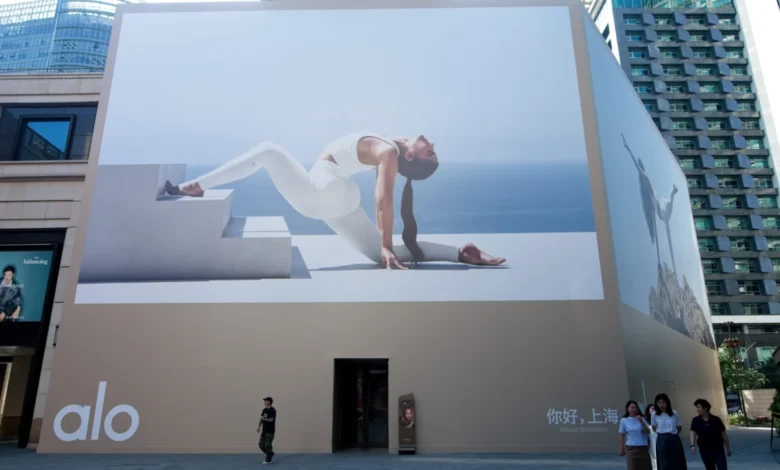
China’s broader economic landscape is currently characterized by cautious consumers holding tightly to their financial reserves, yet the high-end activewear and lifestyle sector is proving to be a stark exception to the rule. Recent macroeconomic indicators reveal that retail sales across the nation grew by a meager 0.4% year over year during the month of August, falling short of the consensus estimates compiled by economists surveyed by Reuters. This sluggish performance underscores a persistent weakness in domestic consumption, which, when coupled with a prolonged property market downturn, dragged second-quarter Gross Domestic Product (GDP) growth down to 4.3%—the slowest pace recorded in more than three years.
Despite this macroeconomic conservatism, Los Angeles-based athletic and wellness brand Alo achieved a massive commercial milestone upon entering the mainland market. When the company launched its official flagship store on Tmall, Alibaba’s prominent business-to-consumer digital marketplace, shoppers rushed to the platform with unprecedented enthusiasm. According to data provided by Alibaba, consumers spent upwards of 10 million yuan, equivalent to roughly $1.5 million, within a single minute of the presale checkout opening at 12:30 a.m. on August 12. This staggering velocity propelled Alo to break existing sales records for newly introduced brands within Tmall’s competitive sports and outdoor category, establishing an immediate and formidable market footprint.
The Chronology of a Calculated Market Entry
Alo’s historic digital launch was not an isolated event, but rather the culmination of a meticulously planned multi-phase market strategy. Long before its official entry onto Chinese digital marketplaces, the brand had already established a passive presence through cross-border e-commerce channels and independent resellers. This early exposure allowed the company to test consumer appetite without making upfront capital commitments to brick-and-mortar infrastructure.
Roughly two months prior to its Tmall debut, Alo officially announced its impending arrival on Chinese social media networks. This announcement triggered a massive wave of digital engagement. Industry publications tracking consumer trends, such as Dao Insights, reported that Alo-related topics generated an astonishing 240 million views on RedNote, the popular Chinese lifestyle and social media platform, in the days leading up to the flagship store’s launch.
Capitalizing on this preexisting digital momentum, the brand initiated an intensive eight-week community-building campaign across Shanghai prior to the Tmall opening. These engagement events included organized running clubs, urban walking tours, outdoor yoga sessions, cycling meetups, and comprehensive wellness classes. Through these initiatives, the company introduced local consumers to what it terms the "Alosphere"—a lifestyle ecosystem designed to blend physical movement, mental wellness, community engagement, and modern culture.
By the time the Tmall digital storefront opened its doors, Alo did not need to spend valuable capital introducing its basic identity to the public. Instead, the brand utilized the launch window to fine-tune consumer experiences, managing localized product mixes, pricing strategies, and its overarching wellness positioning. To further solidify its cultural resonance, Alo partnered with high-profile Chinese celebrities, including actress Zhao Lusi, actor Wang Yibo, and veteran Victoria’s Secret supermodel Sui He, ensuring instant visibility across mainstream entertainment and fashion circles.
Parsing the Numbers: Demand Durability and Product Mix
While the opening-minute sales figures are undeniably impressive, industry analysts emphasize the need for caution when evaluating the long-term durability of this demand. Observers at Dao Insights noted that the concentration of capital into the opening rush was likely amplified by accumulated preorders, the allure of limited-edition promotional merchandise such as branded tote bags, and intense fan-driven demand fueled by celebrity endorsements. Whether this initial purchasing fervor will translate into steady, organic repurchasing cycles remains a central question for market analysts.
An examination of early sales data provides fascinating insight into how Chinese consumers perceive the brand’s unique positioning. According to reports from the China Daily, the bestselling item as of August 14 was not a traditional pair of yoga leggings, which might be expected from an athletic apparel brand, but rather the 1,150-yuan (approximately $170) Suit Up straight-leg trousers, which surpassed 10,000 units sold. Furthermore, a 1,750-yuan (approximately $260) footwear offering recorded sales exceeding 3,000 pairs. Significantly, both items were purchased entirely at full retail price, bypassing the deep discounting strategies that have become commonplace in China’s current retail environment.
This consumer preference indicates that Alo’s appeal extends far beyond the confines of the yoga studio, successfully positioning itself within the lifestyle and fashion segments. This trend aligns neatly with a broader structural shift within China’s economy. Market researchers frequently describe the nation’s current economic climate as a two-speed system where overall retail spending remains stagnant, yet specific pockets focusing on premium sports, wellness, and experiential services continue to experience robust growth.
Other international athletic brands have successfully tapped into this resilient segment. The Swiss running footwear brand On reported a 43.1% surge in Asia-Pacific sales during the second quarter, explicitly highlighting strong consumer momentum within Greater China. Similarly, outdoor apparel specialist Arc’teryx expanded its retail footprint to operate 79 owned stores across Greater China by the close of 2025, marking a net addition of 61 locations since 2019.
Navigating a Competitive Landscape and Incumbent Strain
Alo’s arrival in the region places it in direct competition with established market leaders, most notably Lululemon, which has long dominated the athleisure sector in mainland China. As of August 2, Lululemon maintained an extensive retail network comprising 174 stores across mainland China. However, even this dominant incumbent has recently shown vulnerabilities within the market. During its fiscal second quarter, Lululemon reported an 8% decline in comparable store sales within mainland China on a constant-dollar basis, signaling that consumer preferences may be shifting or that market saturation is beginning to take effect.
By leaning heavily into fashion-forward silhouettes and lifestyle positioning rather than strictly technical performance wear, Alo appears to be carving out a distinctive niche. This strategy allows the brand to capture market share from traditional apparel houses while simultaneously challenging established athleisure giants.
Aggressive Physical Expansion Plans
Buoyed by its digital success, Alo is rapidly accelerating its brick-and-mortar expansion strategy to establish a permanent physical presence in key metropolitan hubs. On September 16, the company officially announced an ambitious rollout plan to open eight new retail stores across seven major Greater China cities through the year 2027.
The planned expansion includes two flagship locations in Shanghai, alongside single stores in Beijing, Hong Kong, Macau, Shenzhen, Chengdu, and Hangzhou. Additionally, a previously confirmed Hong Kong flagship store situated within the prestigious K11 Musea retail complex remains on track to open its doors this fall.
Corporate Leadership Vision and Broader Market Implications
Company executives view these physical storefronts not merely as points of sale, but as immersive community hubs designed to anchor the brand’s long-term presence in the region. Benedetta Petruzzo, international CEO of Alo, emphasized the brand’s expansive strategic vision during the announcement of the Greater China retail rollout.
"Our ambition goes beyond opening stores: we are building an Alosphere," Petruzzo stated, underscoring the company’s commitment to experiential retail.
The broader market implications of Alo’s successful entry suggest that international brands can still achieve explosive growth in China, provided they deploy targeted digital localization, leverage cultural influencers effectively, and offer differentiated lifestyle products that resonate with affluent urban consumers. As Alo rolls out its physical stores over the coming months, industry observers will closely monitor whether the brand can successfully sustain its initial momentum and transform early digital enthusiasm into a permanent, profitable retail empire within one of the world’s most challenging economic environments.